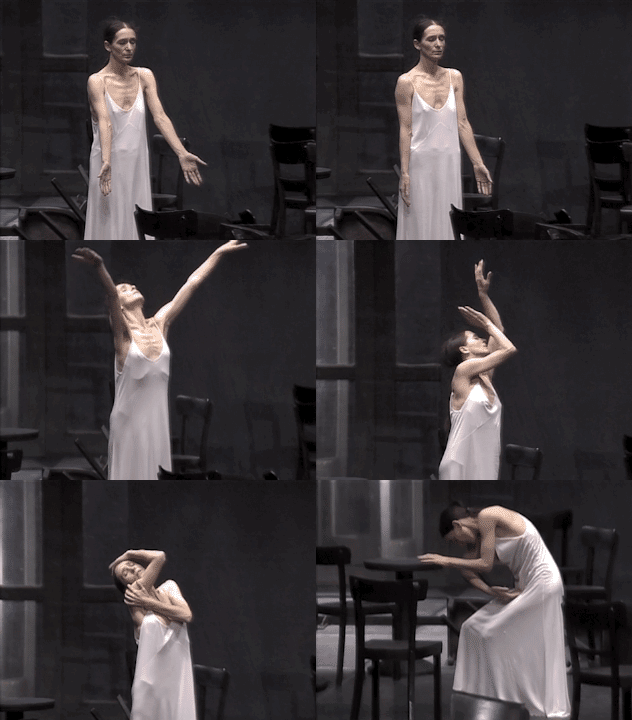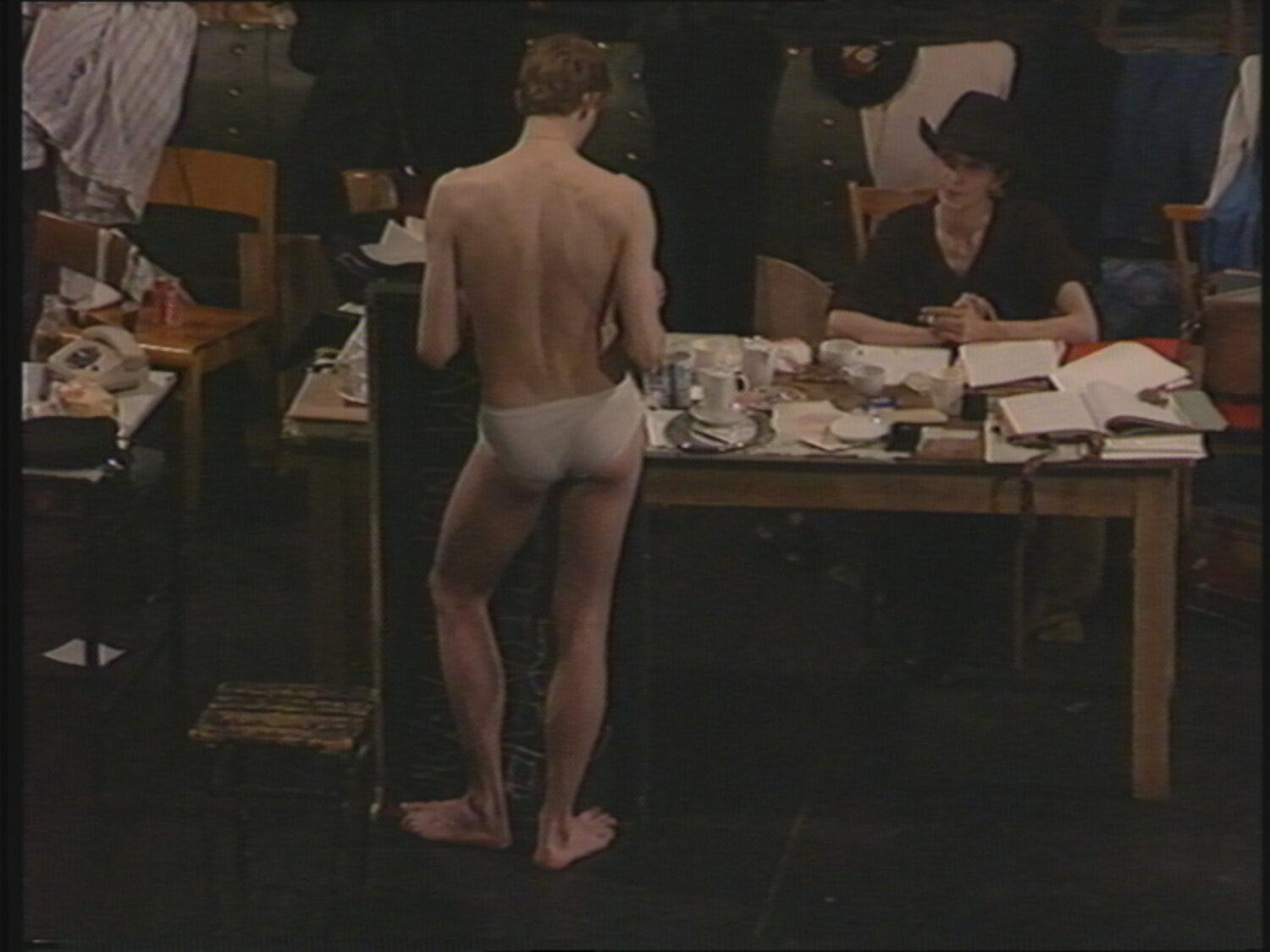














Pina's 1978 TV recording of "The Rite of Spring"
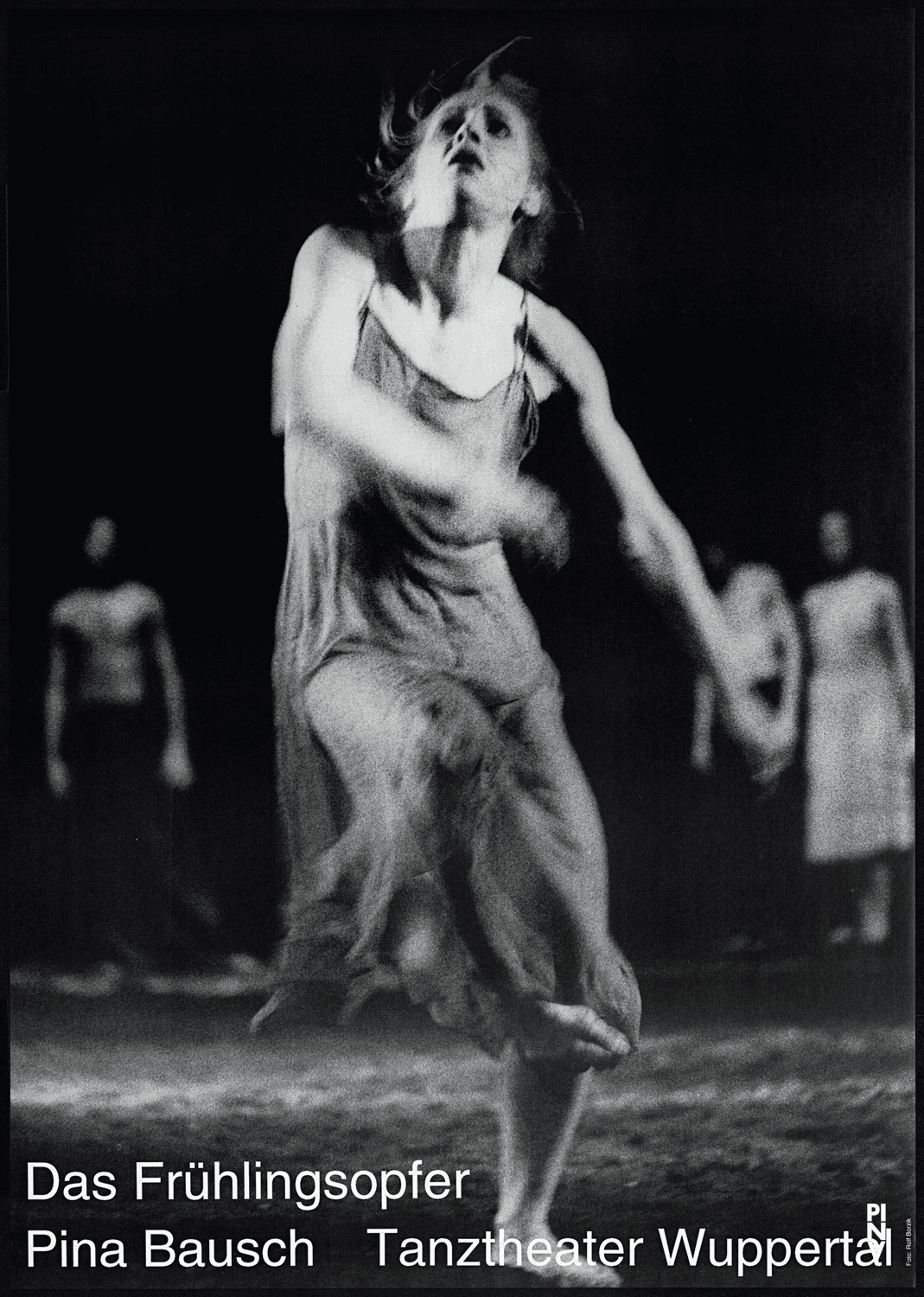
The Rite of Spring
| Music | Igor Stravinsky |
| Choreography | Pina Bausch |
| Set and costume design | Rolf Borzik |
| Collaboration | Hans Pop |
Tanztheater Wuppertal Pina Bausch
A ZDF production
| Light | Pitt Kulbach |
| Camera | Michael Hopf |
| Technical direction | Kurt Schroedter |
| Picture Editing | Gerhard Hennig |
| Sound | Christian Slotty |
| Recording direction | Uwe Petersen Jens Ohlenbusch |
| Production directors | Hans Stürzer Horst Müller |
| Edition | Harro Eisele |
| Direction | Pit Weyrich |
Recorded at Studio Hamburg
A ZDF production
© 1978 ZDF, Mainz
Music
The Rite of Spring
written by Igor Fedorovich Stravinsky
performed by Pierre Boulez and The Cleveland Orchestra
℗ 1970 Sony Music Entertainment
Courtesy of Sony Music Entertainment Germany GmbH
© Copyright 1912, 1921 By Hawkes & Son (London) Ltd.
With kind permission of Boosey & Hawkes Bote & Bock GmbH, Berlin
Pina's Rite from inside
I'll never forget the first time that we did a whole run-through of The Rite. Up until then Pina had been rehearsing the role of the 'chosen' separately in her office.
None of us had any idea how the 'chosen' would dance in order to die. At the time Marlis was dancing her. The choreography unfolded and there we were, sweaty and breathless, the whole room trembling as we watched Marlis fighting against death. It was extraordinary; it was so terrifying that I could barely watch it. I said to myself that she really was going to die. I then had to come downstage, alone. My feet were like lead. My eyes were fixed on Marlis. Then, at the end, she fell down, dead. Who knows whether she wasn't really dead? I couldn't bear it and I ran off stage sobbing – that's how extraordinary it was. The Rite is absolutely unique.
Some years later I was given this immense role to dance. But it was hard for me, I was too light on the ground. I could see that Pina wasn't particularly fascinated by this 'chosen'. Neither was I. My classical training meant that I had very light movements. I had to get rid of the lightness. To try and bring all the movements downwards, pulling down, down, and not reaching upwards as you do in classical dance.
The solo wasn't really exhausting enough for me, I wasn't really dead at the end. What I mean is that I had to do the movements much larger, I had to fight more, stretching as far as I could. I had to push my limits. Forget the steps and the dance. Only listen to the music – just become one with Stravinsky and the fight against death. You have to die, not in the sens of a 'dying swan'. And that's a torturous feeling for each one of us who has danced The Rite. To have been a part of it, whether dancing the role of the 'chosen' or in the chorus, is incredibly significant. Even just the sensation of dancing on the ground, of lying down and feeling the soft and silent earth. Of hearing the others breathe, feeling the bodies tremble, hearing the bodies breathe, getting dirty, sensing the fear of the others, the suffocation within a group, body next to body. Each dancer has to push their own limit. That's the only way it can work. Half an hour before the show begins the earth on stage is carefully inspected. It can't be too wet or we'd slip, nor can it be too dry or we'd breathe all the dust, which could make us cough. Once, when the earth was too dry I coughed for weeks.
an excerpt from Je suis une femme respectable, published by L’Arche (Paris), in 1999, translated into English by Miriam Heard.