



















Interview with Paul Sanasardo, 12/09/2016
In this interview, Paul Sanasardo recalls how he first met Pina Bausch in New York. At the time, she was studying at the Juilliard School. The introduction was made by Anthony Tudor, who later arranged for her to join the Metropolitan Opera. Sanasardo describes Pina as a curious and perceptive artist who was drawn early on to new approaches to dance. Together with Donya Feuer, she worked on pieces based on improvisation, everyday movement, and a strong sense of emotional expression. Conversations about movement, space, and the human body were as much a part of their daily lives as rehearsals themselves. For Sanasardo, these years were marked by an intense exchange of artistic ideas.
He also vividly recalls Pina's life in New York. She was drawn to the atmosphere of the lofts, the industrial neighbourhoods, and the energy of the downtown scene. Much of her time was spent moving between the studio, the Metropolitan Opera, and small, inexpensive restaurants. At times, she even slept in the studio. Sanasardo believes that both the city and its demanding rhythms had a lasting influence on the way Pina thought about dance. Many of the impressions she gathered during those years later found their way into her own artistic work.
| Interviewee | Paul Sanasardo |
| Video edit | Jonathan Rösen |
| Text | Ricardo Viviani |
Permalink:
https://archives.pinabausch.org/id/20160912_83_0001
Table of contents
Ricardo Viviani:
My name is Ricardo Viviani. We are here with Guto Barra, Tatiana Issa and Lynn Barr at the home of Paul Sanasardo. Today is the 12th of September 2016, three days before Paul’s eighty‑eighth birthday, and we are here recording his memories about Pina Bausch. This recording is intended for the Pina Bausch Foundation for the Oral History Project, documentation direction under Barbara Kaufmann, and it is also intended for Production Partners’ documentary on Pina Bausch and New York City.
I thank you very much, Paul, for being with us and giving your time. We’ve been talking for the past two days; we’ve already gone through a great deal of history, and today Tatiana Issa is going to conduct this interview in the English language. Thank you very much, all of you.
Tatiana Issa:
I would like to ask you if you remember exactly when you first saw Pina. How did you meet her? What was your first encounter with that magnificent person like?
Chapter 1.1
Meeting Pina BauschPaul Sanasardo:
Well, that’s beautiful, because I was introduced to Pina by Anthony Tudor. I was training with him at the old Metropolitan School of Ballet, at the old opera house on 39th Street. Pina Bausch was a student at Juilliard School. I didn’t know her, but Tudor taught at Juilliard as well, and he was extremely impressed with Pina.
So one day he told me, ‘I’m bringing this lovely girl from Juilliard; she comes from Wuppertal.’
"I think Pina was only about nineteen years old. I was in my twenties. Tudor told me he was going to bring Pina to the Met, and that she would study with him, and he was going to put her into the Metropolitan Ballet because she was not happy at Juilliard. I don’t know exactly why. She liked the dance training there, but she didn’t like all the other academic things, I think.
‘Anyway,’ he said, ‘when she comes, I’ll have her take a class. I would like you to watch her, because I think the two of you should work together. You might get along real well.’
And then he told me to go to Juilliard, because they were doing a student programme, and Pina was dancing in it. She was doing a piece that Mr Tudor had made, based on ballet technique. And the section that Pina was in was called 100 Arabesques. She was on pointe. So I went, and of course I watched her, and she was fantastic."
Tatiana Issa:
Why?
Paul Sanasardo:
Pina was the kind of dancer who, I think, makes a real dancer. When Pina danced, you knew who she was. It was always very clear. Immediately, you sensed the persona. That’s what I think Mr Tudor liked, because Mr Tudor always said, ‘I don’t want just dancers. I want people who dance.’ And Pina is definitely a person, a real person. So the moment she moves, you think, uh‑oh, that’s who she is. You don’t have to know her name. That’s who she is. And to me, that’s the signature of a great dancer. Some people can do all the pyrotechnics, but they don’t read personally.
So I watched her. I went backstage to tell her how wonderful she was. But of course, Pina was always very critical of herself. And she said, ‘Oh, boo hoo hoo, I wasn’t very good,’ but I said, you were wonderful. I don’t think she liked being on pointe shoes, but she did well, very well.
Then she came to the Met for a class. She still had a few more weeks at Juilliard; it was the end of the semester. And she was going to go back to Germany for a visit and then come back to work. And the reason Mr Tudor put her into the Metropolitan Ballet was so she could earn a living, because when she left, she would lose the grant she was getting. So he said — and Tudor was very clear about that — he said, ‘Now, Pina, don’t worry. This is just a job. This is not who you are. But it’s a job; this way you’ll make some money and you’ll be able to…’ And he said, ‘I would think you ought to work with Paul.’
I watched her in the class, and again I was overwhelmed. I thought, this girl’s really special. And Pina could say very little in English, and I spoke no German. So after class, Mr Tudor took us aside: ‘Now, Pina, I think you should work with this young man.’ He said, ‘I think what he’s trying to do might interest you.’ And so I told her, ‘You come to my studio tonight.’
We talked almost like sign language. I had a studio; I was teaching classes in the evening to earn money for the studio. And I said, ‘You’ll come and take class. You don’t need the class, but you can see how we work.’
I had a very good friend, Donya Feuer, who was also working with me, but somehow Donya wasn’t there that day. So I told her, you’ll meet Donya, and you’ll see our studio, and maybe you’ll like it.
So she came that night and took a class. I can’t remember if it was an intermediate class, but of course she was way beyond that. And after the class — she never took another class with me; she didn’t have to, she had Tudor — she said, ‘Oh, I like it here. I come and work with you.’ Just like that.
And it was really… it’s hard to say when you click with somebody. It was as if our personalities, without knowing each other, blended.
Paul Sanasardo:
I was nobody at that time. I was just a young man starting off, and everybody in New York wanted Pina Bausch. Pearl Lang and Mary Hinkson, whom she liked very much, taught at Juilliard; they were from the Martha Graham Company. Limón liked her very much too. I know even Mary said to her, ‘You should come to the Graham studio.’ But somehow Pina decided to work with Donya and me, which was very, very strange, because we were nobody. We were just two young kids trying to find our way.
But I think that’s what Pina liked. Because even then you knew she would do something beyond just being a dancer. She had a lot going on here. And of course I was fascinated by her background, because I had heard of Kurt Jooss, but we had never seen The Green Table. We just knew of it.
I had studied the Wigman Technique with a woman in Washington I danced with, Erika Thimey. So I was very interested in German Expressionism — Hölderlin, you know, Harald Kreutzberg, people I never saw. I wish I had seen Kreutzberg. I never saw Mary Wigman dance; I only heard her give a lecture at Columbia once. She was already old.
So I was terribly fascinated by Pina, where she came from. We both liked German Expressionism very much. And she gave me a beautiful book of Hölderlin’s poems. She also talked about the sculptor Ernst Barlach. So we felt we had a lot in common, because I was very interested in the German expression. And of course Pina is very German in that way. She’s very deep, very sensitive, and at the same time underneath very strong.
You know. Pina is very gentle on the surface, but that’s not Pina. Underneath she is extremely strong, and I knew that. And you see it in her work, Le Sacre du printemps. That’s Pina — that’s Pina totally.
Paul Sanasardo:
Well, when we first started working, what we would do, we would take class with Tudor in the morning, the professional class. And then, of course, she had to stay at the Met for rehearsals because she was in the opera ballet, and Donya and I would go back to our studio. And we would work, and then we would teach in the evening. And then every evening, she would come to us. And sometimes it would be around 8 o'clock before we finish. And we would play around in the studio till about midnight. That was something we never figured out why, we just liked to do it. And the three of us would just improvise.
We were not concerned in what is dance or the avant-garde. That was not interesting to us. We were more concerned that we thought dance should be more theatrical, more theater. Tudor was our great link. If anybody was a mentor, it was Tudor for us. Because he had definite points of view of what dance was and what it wasn't for him. So we were really interested in pedestrian movements, not only formal movements. And of course, our interest also was we didn't want to do what they call classical ballet, but I call it romantic ballet, because classical is really ... well, I would say that Pina's 'Sacre' is more classical than Swan Lake. You see, Swan Lake's a romantic ballet. And in dance, they get very mixed up about that. They always say classical ballet when they think of Swan Lake. Tchaikovsky only wrote three ballets. And I love Tchaikovsky, he changed ballet by bringing in the folk rhythm, the downbeat. And that's something Pina had very much. Pina knew the earth. You felt she was connected. And some dancers are not. They're very flighty. And this might be because when we trained with Tudor, he always said there's six inches of mud on the floor. Work into the floor, you see. Because Tudors work was not romantic ballet. He used to say, it's modern ballet. And Tudor was very earthy in that way, you see, that was ingrained in him. And Pina had that sense of gravity. Even though she was very slight and always very thin, she had that sense and gravity.
Paul Sanasardo:
Plus Pina have those arms. And it's very hard to explain those arms, you see? Pina's upper body is who Pina is. Because to me, all dancers are pretty much alike from the waist down. But from the waste up, we change radically. That's where the expression is. As Tudor would say, we're the only animal that can do this. (shows) For a gorilla to open the door, has to use the whole arm. We have all that looseness. We have our elbows. The way she moved her arms, that was just Pina. Even when you went to a restaurant with her, she was always doing something with her hands. Pina was always something. I say, what are you doing, Pina? I don't know, just doing. Never mind. Pina had that feeling.
And of course, the spiral. We were very interested in elbows, not the port de bras, the round arm, but the broken arm. (shows) And of course, the isolation of the arm, which Pina had naturally. Pina could move her arms like water. So when we worked together, we just got along real well, you know. The épaulment was very important to Pina. The spiral, you didn't always work straight front. We worked on a spiral, which of course is also in Nijinsky. So we would discuss art a lot at night, talking about what we thought dancing was, not the avant-garde, but what was movement to us. Where Pina and I might, over time differed, was never about the things we liked. We always felt the same. We liked the same thing, but for different reasons. And that was always interesting. Because sometime we'd say 'Oh, that's beautiful.' But if we discussed why, we had different reasons, Pina had her own way of explaining things. And she'd always say, I'm very interested in what makes people move. And she said: 'You're very Italian. You like to know why they move and how they move. You like eat a lot.' (laughs) She'd always say, you like to move a lot. She was very curious about what makes people move. If they come to a staircase, they have to walk up it. And that wasn't surprising the way her work developed, for me. The environment she changed on the stage, the dirt on the stage affected the way that people move. The water on the stage. Pina, very early, was always very aware of what makes people move. I got to a point where, yes, that was interesting to me, but then, how you move interested me more. And that's why I love Pina. I said, well, I don't care what makes you move, I just like the way you move! We used to talk like that. I said Pina, I care why you move but you move beautifully. And she always claimed that was my Italian Catholic upbringing. She'd say, you're so Catholic. That was Pina, you see, very early you knew she had a very definite way of looking at something. And that, of course, fascinated me, fascinated Tudor, fascinated Donya. And often you didn't quite know what Pina was thinking. And she was not verbal about it. I'm very verbal. But Pina? No, she'd be very silent. And yet you knew there was a lot going on. And if you asked her, she sometimes would tell you, and sometimes, it was private.
Chapter 1.2
In View of GodPaul Sanasardo:
When Pina came to the studio, the first thing we did was work on a ballet — a piece Donya and I were revising together, called In View of God. We had already done the work, but we weren’t too happy with it. We were revising it. And we were using children — about fifteen of them, real children; none of them were over eleven. They were eight, nine, ten years old. Pina liked that very much. She liked the children very much. So the first thing I said was, ‘I’m doing this, we’re doing this work, and I’d like you to be in it with us.’
There was a mother and a father — that was Pina and me — and we had two children, two of the children. And then Donya was Death, and she had a whole group of all the other children as death spirits. Pina liked that idea; death didn’t scare Pina. And we talked about this, and it wasn’t children’s theatre. We just wanted to use children. So we worked on that.
It had been done before, and I don’t even remember what the girl who played the wife before did. She was good, but she wasn’t Pina. And so when I found Pina, I thought, you’re really right for what we’re doing. And Pina kind of made her own part — that’s how we used to work. And then we would shape it. I think Pina was still that way: you would improvise, and then you’d say, keep that, don’t do that. So Pina kind of remade the whole part. And I loved what she did.
She had a duet with Judy Blackstone, one of the young little girls, as her daughter. And they got along real well, because Judy had a little bit of what Pina had — even though she was only ten — an intensity. Pina could hold your interest doing nothing on the stage, which is very valuable. A Pina doesn’t have to move if she doesn’t want to, and she’s still interesting.
So we did In View of God. And after about a year of working on it, we performed it.
Paul Sanasardo:
And in the meantime, we had discussed things we were doing. We both were more or less interested in violence, strangely enough.
There was a young man, Robert Craft — people don’t know him — and he had a small orchestra group. He was touring under the State Education Department, introducing modern music to the high schools. And we knew a musician who was part of his group, and Moshe introduced us to Robert Craft. And Robert Craft said, ‘Would you be willing to make a few dances for our repertory?’ He said, ‘I think it’ll go over better with the high school kids if there was some dancing also and not just music.’ So he said, ‘You have to use pieces from our repertory.’
So I asked him what his repertory was, and he had an Edgard Varèse piece, Octandre. And the three of us listened to it. We thought, ‘We could dance to that.’ And we made a dance, which we eventually called Three Phases of Madness. We didn’t know what we were going to call it. For many, many evenings we would play the music, because Pina was very musical. It’s like in her The Rite of Spring — she’d say, listen to it. Pina can hear music. And so we didn’t count it. We loved Varèse’s music.
And for many nights — I can’t remember how many — we kind of pushed each other around, threw each other on the floor. I’m not sure what we actually did. I would knock her down. She would knock me down. And eventually we had a dance, made by the three of us. We each kind of drew up our own. And then we thought, well, now what are we going to call it? And we called it Phases of Madness, because it was pretty mad.
And Pina had all her hair down in it. Donya had her hair cut like a boy. And we wore very simple costumes.
Paul Sanasardo:
Oh — one thing Pina liked about In View of God was that all the children wore their underwear on stage. And the children were very upset, because when we got nearer the performance, they said, ‘Where are our costumes?’ We said, those are your costumes. We had bought them little slips at Macy’s and their little underpants, and they had no top. And some of the little girls were ten, and they thought they wanted to wear brassieres. And we said, no brassiere — you’re naked on top. Anyway, Pina thought that was wonderful. She liked that they were in their underwear. Which later on, you see, she danced a lot in. And we were very much about that. We didn’t want costumes in our works. We wore the simplest things possible.
And then we made two other dances — one to a Varèse that was very short, and another one to Stravinsky. But Phases of Madness — it was just the three of us.
Paul Sanasardo:
That led us into Varèse. After we did that, we realised we liked Varèse’s music very, very much.
And fortunately Varèse was still alive. And I found out through his publishers that he was living in the Village. And we had gotten all the music we could find on recordings of Varèse. And as we were working, we needed more sounds and things. We had a very good sound man, Sergio. He used to make sounds for us. And I was concerned that if we put the sounds in, maybe Varèse would be very upset.
Well, when I found out where Varèse lived — he lived in the Village in a tiny little apartment in the basement, unfortunately. Of course at that time nobody really knew who Varèse was except in the art world. So I called him. He was married; he had a wife. I thought he was ancient, but he was like seventy. (laughs) I thought, he was old — but he was probably only about seventy or seventy‑two.
I told him what we were doing, and I said, we would like to know, ‘Do you have more music that we might be able to use?’ Well, he was a very wonderful man. He said, ‘Can I come to see what you’re doing?’ And I said, certainly.
Lynn Barr would remember — we had three floors on 19th Street. We had a studio on the top floor, a studio on the first floor, and in between we had dressing rooms and a little gallery where we showed art. We used the studio on the third floor; it was bigger than the one downstairs.
His wife had said, ‘You know, Mr Varèse is not going to be able to get up the stairs so easily — could you have someone help him?’ So the day Mr Varèse was going to come to see what we were doing, I told some of the dancers — there were a couple of boys in In View of God, just two. There were four adults in In View of God, and then Donya as Death. And I said, you have to be downstairs and help Mr Varèse up.
And of course I had all my little children. So I told them, now be real, real quiet, because Mr Varèse is going to come. And we have to be ready to go as soon as he comes. So get here early. Everybody be warmed up, because we can’t make him sit and wait.
So we led him up to the studio, and all the little children were warming up at the barre. Pina was warming up. And he came in. And I said, Mr Varèse, when you’re ready, we can start. We were just going to show him some excerpts of what we were working on. We didn’t even call it ‘Laughter After All’ yet. We just knew we were working on something about violence, pedestrian movement.
So he watched, and said, ‘Oh, no, no. Don’t start.’ He said, ‘I like what I hear.’ And I said, ‘What do you hear?’ He said, ‘Would you mind if I brought someone here to record the sound in this studio?’ And I said, ‘What sound?’ He said, ‘The dance away.’ He said, ‘I like the creaking sound in this old building.’ He said, ‘I have great trouble sleeping. And I slept real well on the boat coming to America. And I don’t sleep so well now. And I know I could sleep to this sound. This is the manner.’ It’s absolutely true.
So he listened to the sound — which I wasn’t sure what the sound was. It was just the noise being made by the dancers and the floor creaking or something. But he sat there like this wonderful little man. And then he said, ‘Okay, now you can start.’
And in one little scene, one of the children screamed real loud. We also were making noises. We were testing our voices. And I told Mr Varèse, ‘At this point in the music, I have a little girl screaming. If it bothers you, if it ruins your music, we can take it out.’ And he said, ‘No, no. Let me hear.’
So we did the little piece. It was Judy Blackstone. Judy Blackstone had a tremendous scream. And she screamed at the right point. And he stopped the rehearsal and said, ‘Little girl, come here.’ He said, ‘Scream again.’ He said, ‘Oh, I like that scream. Scream all you want.’ I said, ‘No, Judy — only scream when I tell you.’ He said, ‘Let her scream all the time.’
Well, that was Mr Varèse. And when he left, he said, ‘Oh, whatever you want. I have some sounds at home. Send your sound man. I’ll let him record some of the things I have on my tape.’ Of course then it was reel‑to‑reel; we didn’t have CDs.
So when he got a chance, I told Sergio to go there. And he gave us some extra sounds. So we were working on that — along with In View of God, and along with that little Three Phases of Madness that we were performing in high schools in the morning sometimes, at nine o’clock. And I can’t remember what Mr Craft paid. I think he gave us about two hundred dollars every time we performed — but that was fine. No one had money in those days.
Chapter 1.3
Pina Bausch and New YorkTatiana Issa:
How would you say Pina’s relationship with New York City was?
Paul Sanasardo:
All I can say is that Pina loved New York. She did. She loved the idea of the lofts downstairs. She loved the idea that we were living in the garment district, and there were trucks, because we lived in a loft. She thought all that was really wonderful. Pina Bausch loved New York extremely.
And at night, sometimes we’d finish rehearsing, and we were on 19th Street — it was the tail end of the old garment district. Now it’s called Chelsea and there are fancy stores. But at that time, once six o’clock came, the trucks left and it was like a desert. It was dark, dark, and quiet, quiet, so we could play loud records — our music real loud — until midnight. No one bothered us; there were no neighbours. And if there were neighbours, they were other artists hiding in the lofts. And Pina loved all that. She loved it.
And when we finished, we’d walk to the Village and find some very cheap restaurant to eat, because we had no money. And Pina loved the whole idea. She loved the Village. She loved Tribeca. At that time none of those places had titles. Tribeca wasn’t called Tribeca, but it was Tribeca — just like Chelsea was Chelsea, but no one called it that. They call those sections now. And she loved wandering around into Chinatown. Pina loved that part of the city — the whole downtown area.
I know Pina loved New York. Whenever she’d come, she usually stayed with Manuel Alum in his loft on White Street, right in the middle of Soho. Pina loved that part of the city. And of course we all were wearing clothes that we bought at the Army stores. She liked all that. The way we lived — Pina loved. And we loved New York for that reason.
In New York it was a very different time. The studio we had on 19th Street — we had three floors. We paid two hundred and fifty dollars a month for three floors. You wouldn’t get that now. Subways were a nickel. And there was a Spanish restaurant, El Babeño, on 14th Street. For two dollars you got wine and all you could eat. And we would go there, and we thought it was fantastic. Maybe the food wasn’t so good, but we didn’t think about that.
Pina ate very little — so did Donya — because they were always worried about their weight. And I always ate my food, and I’d eat all their food. Pina would always mention that — what she couldn’t eat, I would eat.
But no — she loved New York.
Guto Barra:
Do you think she was inspired by the hustle and bustle of New York?
Paul Sanasardo:
Oh my God, yes. Oh my God, yes — that’s what Laughter After All was about. In fact, later on, after Pina left, I did a work based on all the signs in the neighbourhood. ‘For the Trade Only’ — I called one section. ‘Pedestrian Resources.’ We loved the signs in that whole area. Pina did too. It had a tremendous effect on us.
The beautiful thing at that time — there were so many beautiful things — but the Metropolitan Opera was on 39th Street. We were on 19th Street. Pina still kept her little room up at the International House, but it was way up by Columbia University. At that time Juilliard School was way up there too.
When Pina started working with us, she’d often stay over. It would be midnight — it was too far to go. So we finally got a little bed from the Salvation Army, a cot, and we put it in one of our dressing rooms for Pina. So Pina kind of lived with us, because many nights it was too hard, and then we could just walk to the Met in the morning. We’d walk up Sixth Avenue to the Old Met.
Paul Sanasardo:
I wish Tudor were alive. He would tell you a lot about Pina before I even met her, because he loved her so much. The Old Met — they should never have torn it down. That was a big, big mistake, because it was gorgeous. The Old Met was like the old opera houses in Europe: a big stage, but the audience was very close.
When we went to class, we would go up through the stage door, because they had two big studios on each side at the top of the building. One was for the opera, and one was for the Metropolitan School of Ballet. So we took class with Tudor up there.
And I was telling Lynn and Ricardo — the studio had almost a sixty‑five‑foot ceiling, because it had balconies with cages where they kept all the costumes. And when you came in, you were on a little catwalk, and the studio was down there. It was a wonderful atmosphere. And of course, when you came in, there were always people going “oh, oh”, singing — it was very theatrical.
We used to go up through the stage door. I loved that building, and so did Pina. And we loved Mr Tudor. So we had that every morning. And then Pina stayed there in the afternoon to rehearse.
Tudor liked Pina so much. He never liked to choreograph for the opera, but he did choreograph Tannhäuser because of Pina. He finally made that for Pina. At that time Rudolph Bing was the director, and Tudor didn’t have to choreograph the opera. He was just the director of the Metropolitan School of Ballet, and he only choreographed when he wanted. But when he had Pina, he did Tannhäuser for her.
If Maria Callas was singing in the building – she was very famous at that time – when Maria Callas sang, people would be in sleeping bags trying to get tickets for days before. But Tudor would tell us sometimes, 'Maria Callas is rehearsing.' And we would climb up onto the catwalk and look down to watch her rehearse. And we'd lay on the cat walk, and Tudors would say, 'Now, what did you see. Now, if you could move your body the way she just lifts her arm, you would be fantastic. He'd say, watch the way just lifts her arms.'
I remember Pina saying that she loved Maria Callas and her arms. Because Maria Callas would just [magnificent].
Paul Sanasardo:
It was a wonderful time. New York at that time was more intimate. And then we would go back to our studio on 19th Street. Except when Pina had to go to her little room, we never went above 72nd Street. Our whole life was from 72nd street down, the rest of the city didn't exist. We never to Brooklyn. It was just that little part of the city, that was our world. So of course we didn't need a car, we could walk everywhere. That was New York.
Some nights when it was real hot in New York, as it would get, we would go down to get the ferry boat to Staten Island. And you only had to pay a nickel. And you got on it, and it went across, and at that time, you didn't have to get off. You could stay on it and come back. And we would sit on the ferryboat late at night, smoking cigarettes, drinking coffee, and going back and forth, because it was cool out there. Pina loved to do that. She'd say: 'Let's go to Ferry Island.' We would sit there. On the boat smoking and drinking coffee and a nickel. And these were the things we did. Then eat in very cheap restaurants and go to class every morning and rehearse. That's all we did, you know. That's what was so beautiful. That was our life. Of course, there was also Paul Taylor involved with us. Pina did a dance for Paul Taylor. We would share concerts. Paul Taylor and everybody liked Pina. Everybody wanted her. She did one performance with Paul Taylor, one little piece he made for her, and Donya also worked with Paul Tailor. I never danced for him, but we shared concerts, but he used Pina once. He often would use Donya, because we were all trying to find our way. Paul Taylor was also very interested in natural movement. He did a concert, which I showed in my book, where he used three girls and himself, and he did a solo for himself for three minutes of silence, and he just sat on the stage for three minute, and the curtain came down. And we all thought this was wonderful.
Paul Sanasardo:
You want me to tell you about it?
Paul Sanasardo:
Oh my gosh. Well, fortunately Ricardo Viviani brought me a [DVD] of it, which I had seen once on television, but I didn’t have a CD. So that day he gave it to me, and that very night I watched it with one of my dancers, David von Ehrlicher. Well, of course, I was overwhelmed again.
First of all, I don’t think anyone should ever do it again. That’s it. To me, it’s the perfect solution to that score. It’s an extremely difficult score. George Balanchine wouldn’t even touch it, and he knew Stravinsky. Jerome Robbins wouldn’t touch it. Jerome Robbins did Les Noces. Martha Graham tried it, and it was terrible. Béjart tried it, and it was awful. The music always wins. It’s a very difficult score because it has so many highlights, and then it’s quiet and then back again. It has so many explosions.
So when Pina did it, the amazing thing is she conquered the score. I was asking Ricardo — it’s a shame, I don’t think Stravinsky was alive when she made it. It would be sad. I think he would have loved it. Because, you know, he was very critical of Nijinsky’s version. He always said Nijinsky didn’t do what he wanted. They had terrible fights. Well, Nijinsky — fortunately we got to see the version that Joffrey put together. I never saw the original. He does it more theatrically, but he doesn’t capture the music.
Now, Pina. The only thing I might regret with Pina is that I wish she had danced longer. Because that’s what Pina was. In her later works you see how Pina looked at the world, but you don’t see Pina — and Pina is something special. Now, in the Sacre they move like Pina. She was still dancing. It’s remarkable. To me it’s — well, as I said — 'Damn it, she did it!' That’s all you can say. There’s not a single thing I would change in it. There’s not a single thing you would want differently.
Of course, Malou Airaudo doing the solo at the end is unbelievable. But I see Pina when I see that piece — the way I felt when I’d watch Pina dance. It was remarkable, because she was still dancing then. So I’m sure she showed them a lot of how she moved, because they captured it. And of course she and Malou are like this (shows). So Malou not only captures what Pina was, but then Malou adds what Malou is. Malou is more earthy than Pina ever was. And she knew how to use Malou. She knew she had the right person, as I was telling them.
You don’t decide, 'I’ll do the Sacre.' You have the right people, and then you say, 'I think I can do the Sacre now.' And I think when she had those dancers — Dominique Mercy, Jacques Patarozzi — they were the first, and then of course Malou. I think she knew Malou could hold that long. That’s a long solo at the end. And Malou doesn’t drop it for a minute. [in the video] You are with it totally.
So I feel that to me would be Pina’s signature piece. I think if one wanted to see Pina, I would say: see that. Because then I say: that’s Pina.
Paul Sanasardo:
You know, one other thing that captures Pina personally — that’s in the Fellini film where he uses her. Not even in the film they made of Pina [Wim Wenders Pina]. I don’t care for it too much. But Fellini captured Pina — that blind woman. I mean, I’d say: if you want to see Pina, see that film. That’s Pina. And unfortunately we don’t have any real footage of her personally dancing. So I thank God for Fellini capturing that, because that’s the way Pina was. Like in that film — she doesn’t need to say a word, but she mesmerises you through the whole film. You just watch that character. And I think that’s again a case in point where Fellini obviously saw Pina and made that film for her.
And Pina was that kind of dancer — once you had her, she would be the seed of what you were going to do. Would we have Margot Fonteyn without Frederick Ashton? Would there be Ashton without Margot? Very much as in George Bernard Shaw — you cannot separate the dancer from the dance. Was it the dance that was good, or was it the dancer that was good? When it’s beautiful, you can’t separate it. It’s one thing. So when Pina danced, the dance and her were one thing.
And that’s what I see in the Sacre. They dance it magnificently, and they capture Pina.
Chapter 2.2
Orpheus und EurydikePaul Sanasardo:
Another place is in her Orpheus und Eurydike — the corps in the back, they have her arms, definitely. And of course I could see Malou Airaudo doing it. I never saw Malou doing Orpheus und Eurydike. I saw her do it in Iphigenie auf Tauris. I did see it at the Paris Opera. She was never able to bring the Gluck operas to America, because Harvey Lichtenstein didn’t want to bring the singers and everything.
I got to see Iphigenie auf Tauris in Wuppertal when she was doing it. But I never got to Orpheus. And the Paris Opera brought it to New York several years ago. Dominique Mercy and Malou Airaudo worked on it. You could see — Malou and Dominique were well represented. The boy who did it was magnificent. Dominique worked with him marvellously. They did it magnificently.
And even the dancers there — when I talked to them after the performance — they said: 'Oh, we only want to do Pina now. This is the only thing that’s really worth doing.' Because they do a lot of dumb things in the opera (laughs). And they all said that to me. Because you could see how they loved it. Their hearts were on their sleeve when they did Orpheus. They danced it beautifully. And I feel that in that recording — that’s a very good recording of it — the dancers believe in what they’re doing. Totally.
I can’t say any more other than: to me there are very few ballets… You know, as a dancer — strangely enough — I was not influenced by the dance world that much. I was influenced by Bergman, Fellini, literature, paintings. Dancers — often what people do in the dance world is very dumb. I often tell my dance people: 'Dancing is very stupid. It’s up to us to make it more important.' And that’s true.
And there’s Antony Tudor’s Lilac Garden. There’s Tudor’s Dark Elegies, his Pillar of Fire. Some of Martha Graham’s early things are magnificent. Some of Balanchine’s early things — Serenade. And of course The Green Table. Unfortunately it’s the only ballet of Kurt Jooss that I ever saw. That’s a perfect ballet. That’s something you wouldn’t want to touch.
Pina’s The Rite of Spring fits into that area. And there may be only that many works in the history of dance that hold up for me. I love Swan Lake — I mostly love Tchaikovsky. To me that’s what makes it work. And he did change ballet. He brought a certain earthiness to it. People don’t realise — in court dancing, waltzing was vulgar. It was considered a peasant thing. Tchaikovsky — it’s all waltzes — there’s that earthy thing in it. And so he’s valuable.
In Pina’s works — her The Seven Deadly Sins. You can’t touch that — it’s so perfect. Her Café Müller — that’s Pina. You know, she told me when she was little, she used to go down in her father’s restaurant and wander around in her underwear and slide against the floor and fall asleep. That’s there. That’s Pina.
But later — the thing you’re always amazed at in her larger works, which I wasn’t always that happy with — but you’re always shocked that Pina had such a good eye for seeing what the world’s about. She’s a good voyeur. She watches people. So sometimes you think: 'Oh, damn, she knows what she’s doing!' I always wanted her to dance more near the end.
Tatiana Issa:
Why? You mentioned that you’d wish she had kept dancing. Do you think that her stopping dancing influenced her work?
Paul Sanasardo:
Pina, to me, near the end, became more about theatre. And of course she had the facilities of Wuppertal and the money, so a lot of the production values became very important. When I’d see her — every time she came to New York, or when I went to Wuppertal to see her perform — she knew I didn’t care for her later things that much. And she’d always say, “Don’t tell me — you don’t talk to me.” (laughs) Because I’d say, “Pina, I want you to dance.” And she’d say, “I know — you like to dance, you like the move.”
And of course Dominique Mercy made his own parts, which she would shape then. Dominique liked to dance, so she’d always put a little solo in here or there. Malou was a dancer. Her people sometimes were not dancers, but they were very good actors. They would do her thing very, very well. But she knew I didn’t care for them as dancers — some of them.
When I first went to Wuppertal, she wanted me to teach the company. And of course it was ridiculous, because they came up with coffee cups and they weren’t all dancers. But she always had some very, very good dancers. Barbara, I can remember. But some were really more actors, so I preferred to teach at the Folkwang School — the students. Because there you can really work on that. I’m very much concerned with how people move. As my work developed, I went more that way.
Chapter 2.3
Laughter After AllPaul Sanasardo:
But when we did Laughter After All, we were very much concerned with theatre — properties, using props and things. I kind of dropped that near the end. I went more towards just pure dancing. But of course we’re all victims of our world. I didn’t have Pina’s money, so you couldn’t fill the stage with water. If we had to travel — can we do it with a suitcase? Just leotards and tights and nothing else. Because we had to pay our own way.
So you found that modern dance here was in an empty stage — and that had a lot to do with financing. It had a lot to do with George Balanchine, when he first came and said they only dance in leotards and tights. He always said, “Well, the Americans don’t know how to wear costumes.” That wasn’t the truth — they didn’t have the money. And he was very interested in seeing just the empty stage. Things like that affect you.
So Pina had a different opportunity than we had. She could do those big productions. And near the end, when I saw the thing on India, she had five follow‑spot men. I asked, “Five?” And she said, “Yeah.” Well, there was an entourage of stagehands back there. There were never more than ten people on the stage. And I said, “We could never afford to travel with all that.” Pina was able to focus in that way a little differently.
I think people didn’t realise that Pina was very influenced by Fellini. It’s not a coincidence that he used her. But Pina really liked Fellini — the way he sees people. If I’d say anyone influenced Pina a lot, it would be Fellini. I know she looked at those movies. We all did. And we were very fascinated by the way he saw people and the types of people. He’d always have some very big fat woman in the back. Pina liked the differences in people.
As a dancer, you look at them for their physical endowment, and then their personality. I think near the end Pina looked at them for their personality, and then what they could do. I would take a dancer and then say: now can you be a personality? So it was just the reverse.
But it had a lot to do with money. It’s easier to travel with five dancers and some leotards than to travel with a whole entourage of people. So the art world — particularly theatre — is very much, as André Gide and many writers who wrote for the theatre said, an art of compromise. You’re working with a lot of people. So you have to know how to handle that. You don’t have the same freedom a poet has. You can’t go in your little room like you write a poem. You don’t have the freedom a painter has. When you’re in the theatre, it’s people you have to deal with. So you have to be very careful — and in that Pina was smart. She knew how to get the right people around her. Not just anybody — but it does take people. And then, of course, it takes financing.
Chapter 3.1
Saratoga FestivalPaul Sanasardo:
When I brought Pina to Saratoga — it was 1971 or ’72 — she told me about Wuppertal. I hadn’t seen her for a while, and I heard she was doing things, and I wanted to see her. So I brought her to Saratoga to work with us. And I told her: you’re going to have to teach. Because it’s the only way I could pay you. We had a summer workshop at Saratoga, but we all had to teach — we had 350 students. And then we performed only on the weekends. So I said, “You’re going to have to teach, but I want you to perform.”
And well — Pina hated to teach. She said, “Oh, Paul, no.” I said, “I can’t pay you otherwise. You’ve got to teach at least one class a day. We have twenty‑three classes that we have to teach every day, and you have to teach at least once.” So she taught, but she wasn’t too happy about that.
She performed her little solo — where she never stood up. And she mesmerised the audience — all of us. When it was over, we thought, “Do it again! I want to see it.” And she made a short little piece for some of my girls. I had five French dancers in my company, and I was having trouble with immigration because their green cards weren’t there. My manager said, “We can’t afford to keep all these French. We are paying them under the table as expense money.” We couldn’t pay them salaries. And so my management said, “You have to get rid of some of them.” But I liked them all.
When Pina came to Saratoga, she told me about Wuppertal. She said they’d offered her to go there to run a company. She wouldn’t have to work with the opera. Because we got that from Tudor — we don’t want anything to do with the opera, only when we want to do it. I don’t want to do little gypsy dances and stuff. She said, “I don’t have to do anything with the opera if I don’t want.” I said, “You’ll never get that offer in America. Take it.” Because she said, “Oh, I don’t know if I want to stay in Germany.” I said, “Pina, we’re having trouble in America. Our funding isn’t so good.” So we discussed it, and I told her: if you’re smart, take it.
And I put her in a house with Manuel Alum, Malou Airaudo and Dominique Mercy. And the four of them got on like this (shows). So she said to me, “Do you mind if I ask them?” I said, “No — I’ve got to get rid of them.” So that’s what she asked Malou and Dominique — she said, “If you come to Wuppertal, I hire you.” She also wanted Manuel Alum, but he didn’t want to go. And then later Jacques Patarozzi went. And so that’s how it started.
Paul Sanasardo:
I do think — and I asked Ricardo Viviani — I never met Rolf Borzik, but he was a tremendous influence on Pina.
Tatiana Issa:
Why?
Paul Sanasardo:
Well, he must have been very much — this is my feeling — the dirt on the stage — like an environmental artist. You have to use real things, not artificial things. Now, that becomes a real problem if you don’t have money. And so you don’t have painted backdrops.
I don’t know if he was an environmentalist. A lot of environmental art and conceptual art came out of central Germany: Marc Henri Reckinger, Anselm Kiefer. We were very aware of it. I think that had a tremendous effect on Pina because of Rolf Borzik.
I’d never met him. When she came to Saratoga, she told me about Rolf. When she first was going to come, she told me, ‘Do you mind if I bring my friend?’ But he was ill. When she came, she said, ‘He didn’t come because he was ill.’ She didn’t tell me what it was. Later I found it was leukaemia, of course. And the poor guy had a bad ending. But she told me about him, and I knew that he meant a great deal to her. He obviously shared with her many, many hours of discussing.
Dominique told me the first full set he made was for Orpheus und Eurydike. With the chairs and the dead tree on the stage. So Rolf was very important. And I know when she made 1980, she told me it was a memorial for him. And she explained to me — the boy standing at the back, and they lift that little patch — she said, that’s really Rolf’s grave. She explained that that was the last piece that Rolf worked on with her. So she told me. She explained, ‘Paul, this is a memorial for Rolf.’
But I never met him, unfortunately. But I do think he was a tremendous influence on her. That’s why it’s very hard. I’m not a mentor to Pina. I was too young. Tudor was our mentor. Then, of course, Pina was influenced by a lot of other things, because Pina had her own mind.
And I would just guess Fellini, Rolf, a lot of German poetry, Friedrich Hölderlin, Käthe Kollwitz. She gave me a beautiful book of sculpture on Käthe Kollwitz. She understood Ernst Barlach. I think Pina was one of these people that absorbs.
Chapter 3.2
Phases of MadnessGuto Barra:
Going back to Phases of Madness. How was her creative input in the work?
Paul Sanasardo:
My friend Mark Franko, who wrote my book, said, ‘You’ve got to revive Phases of Madness.’ I said, ‘Well, I can’t. I don’t know what we did.’ To be absolutely truthful. We were very young. I told you, we used to improvise every night. And for some reason, we were pushing each other around. We were working on natural falling to the earth, violence.
I don’t know what Pina did. I don’t know what Donya did. I just know, when I would give her a big shove, she would fall in a certain way — but it was her way of falling. And then she would jump on me, and we just worked. It wasn’t like we choreographed it. We played with the music. We loved the music and responded to the sound. And then, of course, we had the one idea that it would be violent. And it was really the tension between people — the violence between people.
And you see it in a lot of her work. The men pushed the women down, and they poked people. And we were very interested in that. And we were interested in natural movement. We didn’t want to use any formal movements when we improvised. We’d say: don’t do glissade, pas de bourrée, or any of that nonsense. We didn’t want a terminology. We said: just fall, just run, just jump, just do things.
I worked with Erika Thimey in Washington, D.C., who was from Wigman. Now, of course, Wigman had that also. It was environment. Wigman did not have a syllabus. She’d say: the space is wide, the space is narrow; you’re tense, you’re vibrating, you are pulsing. That was very much a German thing — that probably came from Rudolf von Laban. That opened a lot for modern dance. You see, Martha Graham was not the only one questioning. There were a lot of people questioning — even Vaslav Nijinsky. He was turned in. So we were very much impressed with that area of dance.
There were many things that were dancing that people don’t call dancing. And where is dancing? It’s not just getting up and dancing — ‘Look, Ma, I’m dancing!’ Dancing was a form of expression. It can say a lot of things about human nature, the human being, the emotions. You can’t necessarily do that just with dancing steps, because there’s a much wider range of movement if you watch people.
Paul Sanasardo:
Mr. Tudor was very valuable, because he’d always say, ‘Don’t only learn here in class. Watch the people on the street.’ He’d say: I went to the Art Institute of Chicago, and I graduated from there. We were told: don’t just look at the art in the museum. Go to the Field Museum and look at primitive art. Look at Egyptian art. Look at people on the street. Look at some of the things in the bakery — the way they decorate a cake. All these things are part of dance. And Pina understood that. When we met, we talked a lot about that.
And so I’m sure Kurt Jooss was a tremendous influence on her. Because when I met Pina, she was only nineteen, but she already had a very wide range of looking at things. I shouldn’t say this, but ninety per cent of the dancers are stupid. It’s very hard to find intelligent dancers. Some dance beautifully, but they’re so involved with looking good and being beautiful — and are they thin, and is their arabesque right? And they get all tangled up in that. It’s hard to meet a dancer that doesn’t get lost with that. Because many dancers — they see themselves as they dance. That’s death. ‘Do I look good?’ ‘What do you mean, do you look good?’
And so it was very hard. That’s why Donya meant a lot to me — and Pina. We were able to work together because we were looking for other things. How could you not love the pas de deux in Sleeping Beauty? It’s one of the greatest pieces of music. I mean, it’s beautiful. It’s absolutely beautiful. But there are all kinds of beauty, and I find truth is beauty. And that was the most important thing: are you truthful about what you’re saying?
I worked with Anna Sokolow, who was a tremendous influence on me, and she only had one criticism when you worked. She’d say, ‘I don’t believe you.’ Oh, she said, I don’t believe you. So you have to figure out: what am I doing that’s wrong? That was it.
Tudor would have a very strong influence. We would work on repertory — like when Pina did Caroline. We would work in sections of his ballets. He’d say, ‘Now, would Caroline do thirty‑two fouettés? Wouldn’t that be stupid?’ He’d say: stop the whole dance, stop the whole ballet, and do a trick. He’d say, ‘Now we’re not interested in that, are we?’ He’d say, ‘We have to figure out what Caroline would do. Would she do that — that kind of person?’
Paul Sanasardo:
When I worked with Anna, I was in the original Rooms, and I had to do panic. When I first went to Anna — she was looking for a boy to form a company, and Donald McKayle introduced me to her — I would come from the Graham Studio. I was studying at the Graham Studio. I was with Martha. Anna had danced for Martha way back in the very beginning.
So when I went to her to have a look at me, she told me to come in the room. She said: stand over there. There were some chairs against the wall. She said: get a chair and sit down. And she looked at me. And then she said: come here. And she said, ‘You’ll be fine. Now, I hear you’re at the Graham Studio.’ And I said yes. She said, ‘When I say fall, can you just fall on the floor? Don’t do a one‑two back fall. Can you drop?’ And I said, I think so. She said, ‘What do you mean, think so? Can you or can you not? And don’t point your pretty feet.’ She’d say, ‘I know you think you’re good looking. So when we do Rooms, don’t show yourself — just rub the floor. And don’t let me know how you do it — just sit. Don’t pose.’
These are very good people. They made an impression. And I know Pina liked Rooms. She had seen us perform it. I did it: just sit on a chair — don’t perch on it.
Martha Graham would never mention anybody. She always acted like there was no one before her or after. And I know she saw Nijinsky, because there’s so much there — the pleading — but she never mentioned it. She did dance some scenes from The Rite of Spring. People don’t know that. But the one dancer she would always mention was Alicia Markova. And she would say: go see Markova do Giselle. She liked Markova. And sometimes Markova would come to the studio to watch a class.
And Markova would perch (shows) on a chair. Martha sat on a chair. That was the difference. Martha sat on her chair. Markova always showed that she sat on the very edge of the chair — so there was like no weight.
Markova would do Giselle, and she wouldn’t push from the floor. Because she said: if you’re a willy, you don’t show gravity. But she had tremendous gravity. Tudor once said — and I asked him — he wanted her to stage the last act of Giselle for the Metropolitan Ballet. She was the ballet mistress of the Metropolitan Ballet. Well, after she worked on it a while, one day she came to Tudor: ‘Mr. Tudor, they can’t do Giselle.’ And he said, ‘Why, Markova?’ She said, ‘They don’t have wings.’ That’s it — no Giselle. What she was saying was that they showed too much gravity.
But Markova could jump like you cannot believe. But she never would do that on stage. Well, she was putting the Pas des quatre together of Dolin’s. She was rehearsing, and she had Lupe Serrano — who was a powerhouse dancer — but of course Lupe was doing the mazurka. And she told Lupe, ‘You do three jetés — one, two, three — and you have to be way over here.’ Well, Lupe had tremendous jumps, but she would do three and land here. She said, ‘No, darling — there.’ With her shawl.
So Lupe went back, and she did it again. She said, ‘Markova, it’s not possible. I can’t get there.’ She said, oh my gosh. She got up, she tucked up her bloomers, took off her shawl, and went pow, pow! And she landed over there. We were all shocked. Tudor said, ‘Yeah — underneath those tutus there’s power. Don’t let her fool you.’
And the men who partnered her said it was hard to pick her up, because she wouldn’t push from the floor. She didn’t want to be carried up here. They only carried her chest‑high. But she looked like she never touched the floor. She kind of floated.
That’s an artist, you see? Pina had gravity.
Chapter 3.3
American criticsTatiana Issa:
How do you think the American audience, the critics, and the ballet world saw Pina’s work?
Paul Sanasardo:
When Pina Bausch first came, the critics weren’t too kind. And that was tragic, because she was doing some very good programmes. She had Le Sacre du printemps. They weren’t ready for her. Arlene Croce in The New Yorker magazine didn’t like her at all. Clive Barnes didn’t like it for the New York Times. A lot of the audiences walked out, you know.
It wasn’t until she became more known — and then sure. Of course, there were people who recognised right away that this was wonderful. But the general public wasn’t ready for her here. But I hear in Wuppertal she had a lot of problems in the beginning. They weren’t ready for her there either. It took a while.
But the first time she came, I remember that the critics were not too kind. Later, Anna Kisselgoff liked it very much. I know Clive wasn’t happy with it at all. He just felt it wasn’t right. These were the important critics at that time, because they had the big papers. So they weren’t terribly positive about it.
And of course, I remember the first performances here — a large portion of the audience left at the intermissions.
Tatiana Issa:
How did she deal with criticism?
Paul Sanasardo:
Pina was amazing in that way. We never talked about it. Well, to be truthful, every artist — we’re affected a little bit by it. But I think Pina — and she never mentioned it to me — she never asked me what I or they thought about it. I’m sure it affected her, or at least it makes you think: ‘Are they right? Are they not right?’
But the people that mattered to Pina — I know she sent a limousine to pick up Tudor and make sure he came — meant a lot to her. And of course, Tudor was overwhelmed. When he got the medallion here in the city, during the programme, they asked him, ‘Mr Tudor, what’s new?’ He said, ‘Pina Bausch.’ He said, ‘I was overwhelmed.’ That meant a lot.
Even if you’re pretty solid — and none of us are completely — in what you’re doing, you always have doubts. You always feel: am I really right? It doesn’t take much to take us off our pedestal. So you rely on a few people that really matter. Because if what matters to you is the public, you’re in trouble.
Martha Graham used to always say: ‘You don’t know what ten people think — how are you going to know what a thousand people think?’ She’d say: ‘Put one very intelligent person out there and talk to that person.’ The Spanish say: speak to God. They’re smart. ‘Fuck them. Speak to God.’
Tudor had a lot of problems. For twenty years, he didn’t choreograph. And then he choreographed something for the Met, and I thought it was very beautiful — to the last songs of Brahms. And the critics were very negative. They said, ‘It’s not really Tudor — top‑drawer Tudor. He’s over with.’ It wasn’t like his other ballets; it was just some separate songs. It was very beautiful.
And the next morning, I was on the elevator going up to class after the performance at the Met, and he was on the elevator. I said, ‘Mr Tudor, your ballet was beautiful.’ He said, ‘You thought so? Well, they didn’t like it.’ He said, ‘You liked it?’ I said, ‘Yes.’ It hurt him. You rely on a few people after a while. You have to, because it’s very hard to know what they’re thinking out there.
But it does matter. Does anybody ever write a poem not wanting someone to read it? They claim Emily Dickinson never had anything published but one poem. But they did find all her poems in a trunk — all labelled, which ones belong in this volume, which ones belong in that. She was talking to someone. And of course her poem My Letter to the World says it all. It’s an act of communication.
We do want to communicate — but I want them to like me for what I’m doing, not for what they want me to do. And that’s a hard thing to do, you see? That’s a very hard thing to do.
Paul Sanasardo:
I say: Pina, with all her quietness, there’s a bit of steel underneath there, and she weathered it. I hear she had a hard time in Wuppertal in the beginning, but fortunately the director believed in her and just didn’t bother. Of course now they love her, because she’s like their Rhein girl, and she got famous.
Do they really like what she did, or do they like it because she is famous? People know Martha Graham, but they don’t really know what she did — but I think if they ever saw what she did, they would hate it. But the name means a lot to them: ‘Oh, Martha Graham!’ So you can’t always be sure.
André Gide, the great writer, said: ‘Be careful, even when you get good press. They might like you for the wrong reasons. Be careful. Don’t get carried away.’ So you don’t know.
Paul Sanasardo:
When I did Laughter after All, Pina and I worked on Laughter with Donya, and then she got very ill. She was very, very thin. And that became a real problem. Ricardo said: there’s a little blank period we know nothing about. She got so thin — because Pina was very anorexic. She got very upset about herself. Pina never liked her thighs.
We were very concerned, so I called Lucas Hoving — who knew Kurt Jooss and knew Pina — and said, ‘Lucas, we’re very concerned. Pina needs to have someone look at her, because she wasn’t eating. And she was crying a lot.’ So Lucas took one look at her and got her sent back to Germany. And there was a period there we know nothing about.
I remember I asked Pina, ‘What happened?’ She said, ‘Nothing.’ I think she was in the hospital for a while, because she didn’t surface again until about three or four months later, when I heard from her. And later on I asked, ‘Pina, what were you doing when you first went back?’ She said, ‘No, I don’t want to talk about it.’ So it was a hard period for her.
So Pina — you know — she was strong. She weathered a lot. And so I think she was aware some people didn’t like her. I give her credit for: she just kept going. And that’s what you do. Thank God for Wuppertal, who supported her and allowed her to keep going. If that wouldn’t be there, we might not have a Pina Bausch.
Paul Sanasardo:
Would we have a Martha Graham without Bethsabée de Rothschild, who supported her? Without Lincoln Kirstein, would Balanchine have existed? We are dependent. I had some very marvellous supporters — and when I lost them, I lost my place.
So Pina was aware — but we never discussed it. We never talked about it. It was always a private feeling.
When I did Laughter, Walter Terry wrote a very big review. We had five newspapers in New York at that time, and a lot of dance articles. So we got reviewed all the time. So the first morning after that, I of course ran to some little coffee shop and bought all the papers, because I wanted to know what they were going to say. Because it was my first concert all by myself — not with Paul Taylor. I was doing my whole evening myself — ourselves.
Well, Walter Terry — who liked me a great deal, because he’d seen me with Pearl Lang and with Anna Sokolow and with Martha Graham — there was a big picture of me in the Herald Tribune, where he was at that time. And the headline said: ‘Why would such an excellent dancer want to be such a dreadful choreographer?’
And I remember thinking: ‘Holy Christ!’ I sat down and read it several times. And he went on to say he thought I was a wonderful dancer, but I had absolutely no talent for choreography. I shouldn’t waste my time with that. I should just keep dancing.
You have to do a lot of things when that happens. I sat for a while. The other critics were not that bad, but they weren’t very good either. But his was right out. Because Walter liked me as a dancer — as he’d seen me.
So then you sit down. I thought about Walter. I know he’s a little fat — I don’t want to say old queen. What does he know? But when we see something in print, it looks real. Put it in print and everybody believes it.
So I had to take the paper and put it aside and think of him — the person. Would that person mean a lot to me? You see — no.
Chapter 4.1
People that matter to youPaul Sanasardo:
Now, Tudor was wonderful. When he’d come and see us, he would just give us criticism: ‘Don’t do that too much.’ I had some movement in it, and he said, ‘You know that movement you did on the floor? It was very beautiful. You did it once, and I said, oh, how wonderful. You did it twice. If you did it three times, I figured it out. Don’t do it three times.’ You see. That’s advice.
It meant a lot what he thought. It meant what Anna Sokolow thought when she’d come. If Martha Graham was in the audience, we were worried. I would have loved André Gide to see my work, because I loved his work. I would’ve loved Katherine Porter to see my work. That would’ve meant something to me.
But many people in the dance world are very stupid. And many of the critics are very stupid. And so you have to remember that. They’re only people who write. The paper’s important — not anymore, but at that time, if you got good press in the New York Times, you got more bookings. If you didn’t get good press, well, that affects your bookings.
So Pina was fortunate because she was strong — and she was also fortunate because she had Wuppertal. So whatever that bad period was, she was able to still keep working. That’s important. And of course she was strong enough to keep working — and brilliant enough to have ideas to keep working. It’s not just the money for us.
Many people have support and do nothing. Many people come from rich families, but they’re not Lord Byron, who wrote poetry. Wonderful. André Gide had a private personal income — but it’s not that. He didn’t have to work. Thank God for him. He could write his book. But a lot of people had a private income but did nothing with it.
So Pina had Wuppertal supporting her — and that was a wonderful thing. But it had to be Pina first. And I don’t know who the director there was, but I know he must have liked Pina. He must have believed in her, because she told me, ‘I could do whatever I want.’ I said, ‘Go.’
Paul Sanasardo:
I knew Batsheva de Rothschild, who supported Martha Graham. And when she formed the Batsheva company in Israel for Martha, then she formed another company — Bat‑Dor — to do other works besides, because Batsheva only did Graham. She brought me to Israel to do one of my ballets — she had seen it with the Alvin Ailey company, Metallics. And she wanted me to come to Israel and mount it for Bat‑Dor.
In America, we knew her as Betsby, but in Israel she took the name Batsheva — her Hebrew name. So when I got there and we were having dinner, I said, ‘Batsheva, it’s so sad that you left America, because you did so much for modern dance.’ She produced many modern dance festivals on Broadway. She built the school for Martha.
And she said to me, ‘Paul, what’s modern dance?’ And I thought, ‘Batsheva, don’t be silly — you supported Martha for all these years.’ She said, ‘I don’t know what modern dance is.’ She said 'I liked Martha. I liked her work. Are you a modern dancer? I like you, I like your work.' That's aristocracy. She said 'I don't call it modern dance. I like you, I liked your work.' And she brought me there four times.
Now, we do know about the little Princess of Portugal: when the King of Spain asked her to marry him, she said 'Only if I could bring Scarlatti.' And of course, Da Vinci died in the arms of the King of France. When everybody was against Da Vinci – he wasn't being very well liked in Italy – the King France liked him to come. So thank God for that one or two people who understand you.
Paul Sanasardo:
I would say one more thing: Martha Graham brought Isamu Noguchi, the sculptor, to our studio to speak to us. He was doing her sets. And of course, we were all very excited, because Noguchi was, at that time, very well known in the art world. And Noguchi said a very beautiful thing to us, he was talking to us and he said, 'Love those who influence you, and influence those you love, and forget everybody else.' (laughs) That's tremendous advice. Pick the people you're speaking to.
When I'd perform, I would always put either Anna Sokolow or Pina Bausch or someone like that out in the audience and talk to them. Because if I looked at all those people, I don't know who they are. So I'd always think, maybe Pina's watching.
It matters who's watching you. But you have to like that person and believe that person. It has to matter to you. Art is not a business, it's not a career, it's a way of life. And just like relationships, why do you love that person and not that one? I can't say it, but I like that one. It's very personal. And every artist has his own audience. I think if he's worth his salt, he doesn't speak to the masses. He speaks to one person. And maybe that's why we create God. I'm not sure if I believe in God, but I sure would like to think there's someone listening. You see, we need that.
Chapter 4.2
FriendshipPaul Sanasardo:
Well, I know when they asked Pina how she felt about Donya, she said, ‘I don’t know. All I know is my life would have been different if I hadn’t met them.’ And I thought: smart girl.
No, it’s true. No, my life wouldn’t have been the same. Maybe there are that many people (shows) I could name. First, I’ll start with my mother. My mother’s more important to me than my father. As a child, you have to have that. And then I can name them — and there’s not that many — and certainly Pina was one of them, who changed your life.
And you don’t do it consciously. It’s like weather, you see. It affects you, and you’re not even sure of it until it’s over with.
It’s like when I last saw Pina the last time — she knew she was going. And she insisted I come to New York to see her. We wanted her to stop smoking, because we knew she had collapsed in London earlier. I told Pina, ‘You’ve got to stop smoking.’ She said, ‘Why? It’s too late, Paul. There’s no point.’
And all she said to me was, ‘Paul, fifty years. We’ve known each other fifty years. How come?’ We didn’t know that way back then. But fifty years later, we never lost each other, even though we were not always together. Most of the time, we were now together after a while. But somehow we were always together, and she always wanted to know what I thought. She always knew before I would say it what I thought.
So when she knew I didn’t like something, she’d say, ‘Don’t tell me. I don’t want to hear it.’ Because she knew me. If maybe I was a little critical of something — and she could spot it before, in the way I might have reacted or something — she’d say, ‘OK, OK, let’s not talk about that.’ She’d say, ‘Let’s go have dinner.’
It’s hard to say, but yes — I would not have been the same without Pina, without Donya, without Pearl Lang, without Tudor, without my mother. I had a very wonderful friend, Bill Weaver, who was my personal manager. Without him, things would never have happened. He was always there to make sure that I was taken care of.
Some people matter and make a big, big difference. And even now, when I do something, I often think: I wonder if Pina would like it. (laughs)
Paul Sanasardo:
How could you not miss Pina? My real problem with that is that, because we didn’t see each other that often, I still think she’s there. You see, it would be something else if we were living together all the time — I’d be more aware of the absence.
So I have this difficulty: if I’m not careful, I still sometimes have this feeling, ‘I think I’ve got to call Pina.’ ‘Oh Paul, forget it. She’s not there.’ It still happens to me sometimes if I’m not careful. I want to hear her.
Thank God for Malou Airaudo and Dominique Mercy. Whenever I miss Pina, I call them. Because we all miss her, you see, and between the three of us she’s still alive — very alive. Of course I miss her, but there are times when I have to remind myself that she’s gone.
It’s like all things in death. You’re not sure. How did it happen? Why did it happen? I do think Pina left much too soon. She hadn’t even reached seventy yet. I remember when I saw her the last time — I knew she wasn’t going to last too long, but we didn’t expect it so soon.
It was only three months after I saw her that she collapsed in that rehearsal. Dominique called me. Malou called me immediately, and the first thing Malou said on the phone was, ‘Disaster! Disaster!’ She started screaming. I said, ‘Oh, what is it?’ It was a shock. It was a shock, because when someone means that much to you, you’re not prepared.
So it was harder for Malou and Dominique, because they were there. For me, it was like a phone call. And I put the phone down — is it really real? Did it really happen? I wasn’t sure. But I thought, well, it must be true, because Malou said it was.
But it took a long while to accept it, because I wasn’t seeing her every day. And every once in a while I think, ‘I would like to see Pina. I wish she’d come.’ And I think, ‘No, she’s not going to come anymore.’
So you don’t just wipe it out. It’s like something that’s with you. But I would be more aware if we were seeing each other every day. That empty space would have been more clear — like for Malou. It was very hard on Malou and Dominique, because they were with her all the time.
I know Malou particularly was affected very badly, because Malou was very close. Malou told me that when she was in the hospital, she didn’t want anybody to see her. And Malou was very upset about it. She said, ‘I wanted to see her.’ But I can understand Pina — it’s like a wild animal when you’re really down: ‘I don’t want to talk to anybody.’ You don’t want them to see you in that position.
Pina had a lot of pride, so she didn’t want anyone to see her in a very vulnerable position. That bothered Malou. She said, ‘Paul, she wouldn’t let me see her. I wanted to see her. I wanted to see her.’
No, we don’t forget someone like that. And as long as I’m alive, Pina will be alive, because she’s alive in my life. To me, Pina didn’t die — she just left. Because I remember her so clearly. I can still feel Pina.
Paul Sanasardo:
It was wonderful to dance with Pina when we did In View of God — partnering together. She was very easy to dance with — not easy off stage. Before Pina would go on, she was a wreck. ‘Oh Paul, I won’t be so good.’ And then we’d get on stage — she’d be like the rock of Gibraltar, and I’d be a wreck.
So I’d tell her when we were about to go, ‘Pina, don’t come near me. Stay away from me. Because you’re going to be good anyway.’
There was nothing closer — and this is my feeling — than what goes on between two dancers on the stage. You can’t put that away. No sexual experience can touch it. You’re very, very close.
Partnering Pina felt like a part of myself. We never had to worry about that. Pina just went up. I never had to worry about what she was going to do. She just did it.
I felt that with Pearl Lang — I partnered her for many years. That’s why, particularly, ballerinas want their own partners. I was forty‑and‑some years old, and when Pearl was doing her concerts, she’d call me and say, ‘Paul, you have to come and partner me.’ I’d say, ‘Pearl, I’m too old.’ ‘Never mind — you have to come.’
Because there’s something you can’t explain. Martha was that way with certain partners. I don’t think anybody ever replaced Erick Hawkins. And sometimes we would learn Erick’s parts, and she’d watch, and then she’d slam the table and say, ‘There’s not an Erick in this room.’ And she’d walk out.
We’d think, ‘Well, we know there’s not an Erick in this room. What are we going to do about it?’ And the women didn’t like Erick. They said, ‘Don’t worry — you’re better than Erick.’ Not to Martha.
Chapter 4.3
IrreplacablePaul Sanasardo:
When you finally find someone like Pina, she’s not replaceable. Anything that’s really valuable in life is not replaceable. Only general things are replaceable. But you can’t replace your mother or your father, even if you didn’t like them. (laughs) You can spend your life looking for a mother, but your mother’s your mother.
And that’s true with Pina — you can’t replace someone like Pina. Donya. No, I miss her — yes, of course I miss her. Now that you all come, I even miss her more, you see. I’m almost crying, because I try not to think about that. I always like to think that Pina’s still alive.
Even if I paint a painting, I wonder what Pina would think, or what Tudor would think, and what Anna would think — the people I know that really mattered. I don’t give a damn what the audience thought. But of course, we need them to buy the tickets. So what are we going to do?
As André Gide said — he only wrote one play — we’re too dependent on the audience. It’s better to stay home and just write. And he had a private income. You know, an artist in the theatre has got a problem because he needs that.
I don’t miss performing. I told him the other day, I miss going to Tudor’s class. I do — I have dreams that I can’t get in because I’m too old. I never miss performing. Because performing is not that perfect. But sometimes in class, with a person like Tudor, it’s just you and that class. And you don’t give a damn if they like it or if they don’t like it.
I just loved stretching my leg. I just loved lifting my arm for no reason at all. I just loved that. What the hell — so they don’t care about it. They don’t know about it. Another dancer knows about it. Someone else will move.
That’s why it’s good to train children to dance — because they’ll appreciate it better, if they can. If we didn’t all speak a language, we would understand the poetry.
Paul Sanasardo:
So we’re living in an age where technology is one of our greatest evils — it’s taking man away from himself. And what man makes by himself is not the same as what a machine makes. And that’s the same thing in dancing. If I ask all four of you to do a tendu, I’ll see how different you are. (laughs) I’ll see your differences.
If I asked you all to say, let me see you do this — then I’ll know who you are. But if I just talk about dancing, it’s not the same. But if I have two people in front of me, I will find out a great deal about them.
Martha Graham used to always say: don’t tell me anything about yourself — no résumé. Just dance. I’ll tell you who you are. That’s true.
Anna Sokolow would say, ‘I don’t believe you.’ She’d say — Tudor would say — ‘That’s not really right for you. You shouldn’t do that.’
I was in the New York City Opera Ballet Company for a while, and Tudor came to see me. And he said the next day in class — he always criticised us in class in front of everybody because he made a stronger point — and he said, ‘I saw you last night at the opera. You’re a very good fake.’ I said, ‘What?’ ‘Oh yes — you are very good at lying, but that’s not who you are. You in a pair of pink tights? That’s not who you are. But you faked it very well.’
And I thought, ‘Oh dear!’ Well, I must say, in Fledermaus I did all kinds of funny things. I had to admit, ‘Yes — he’s right.’ This big boy doing this is kind of silly. It’s very true. It matters what you do — how you do it.
Once I was with Pina and one of the dancers asked her, ‘Pina, why did you form a company?’ She said, ‘Because I wanted to dance. That’s why we formed a company. I want to dance, and they’re not dancing the way I want — so I’ll make my own dances.’
That’s always important. ‘I danced for a lot of people, but they didn’t dance quite the way I wanted to dance — so then you have to make your own dance. It’s just that simple.’
Pina always had very good answers — very quick. ‘Because I wanted to dance.’ I said, ‘Pina, you’re right.’
I don’t know if there’s anything else you want to ask me.
Guto Barra:
What is the most cherished memory that you have of you and Pina together?
Chapter 4.4
New York in the 60sPaul Sanasardo:
Oh, it’s hard to say. That’s real hard. I have the most cherished memories of when we were young, because I miss my youth. That’s when we were really wonderful, and I think Pina too. When we saw each other, and Pina said, ‘50 years, look what’s happened to us.’ We liked each other when we were young. We liked who we were. We liked the way we were. We had our complaints about ourselves, but we believed in ourselves.
You always fuss with yourself, but you didn’t want to be anybody else. You wished that this self had maybe some other things, but ‘I don’t want to be you.’ We were very happy at that time. I don’t remember being confused. We felt we were changing the world. Unfortunately, we only changed ourselves. But we thought we were out to change the world. We didn’t like the way the world was. We didn’t like the dance world — they were all stupid and silly, except for Tudor or Martha.
Once she was in New York and we went to see the Cuban dancers doing tangos — they were wonderful. We had to go back three nights for Pina. Just the way those little old ladies did a heel — we thought, ‘Now that’s dancing.’ They were beautiful because they were honest. They weren’t acting sexy — they were sexy. Pina loved that.
We saw Shanta Rao. Pina said, ‘You can tell when people are honest.’ We saw Antonio Escudero at seventy‑two. He sat on a chair clicking, and he rose off that chair — he was clicking his nails. You heard it in the balcony. He said, ‘This is gypsy dancing. This is real.’ Pina liked that.
We saw Carmen Amaya at the Village Gate. She danced the men’s dance. She split her shoe one night and kept beating with the other foot. They threw another shoe out. She put it on. She looked at us like it was our fault and spit — then went on. That was a dancer.
Paul Sanasardo:
We would see everything. We would spend all night smoking and drinking coffee, talking about how wonderful Carmen Amaya was, and maybe we could get there with what we were doing.
I miss that time — but of course, it’s my youth. There’s nothing like when you’re young and you think you can change the world. Katharine Hepburn said, ‘I was going to change the world, but all I do is change myself.’ And that’s true.
I believe in art. To me, art is a religion. It’s not a career. It’s a way of life. I tell every young dancer: ‘Is this necessary for your existence?’ If it’s not necessary, don’t do it. And don’t think you’re going to make money by it.
Tudor used to say, ‘Nobody needs us. We need us.’ An artist makes the thing first and hopes they want it. That was Pina. They didn’t like her at first.
Walter Terry once wrote a terrible review. Ten years later he wrote a huge review in Time Magazine on ‘Pain’. I said, ‘Do you remember what you said ten years ago?’ He said, ‘Did I really say that?’ I said, ‘Yes — you wrote that, son of a bitch.’ (...)
The audience wants what they already know. Young artists have a real problem today. My mother used to say, ‘You don’t miss what you don’t know about.’ And that’s true.
Paul Sanasardo:
Now people want to know who Pina is. I say, ‘Well, it’s a little bit late. You missed her.’ You’ll know about her now, but you’ll never have seen her. (...)
People know about Balanchine, but they know the junk — ‘Stars and Stripes’. He adjusted to his ballerinas. He didn’t try to make one be like the other. (...)
Bob Joffrey was smart. He found the right repertory. He didn’t imitate. He brought ‘The Green Table’. He found a different profile. (...)
Now most dancers come from abroad. That’s tragic. Many American kids are not trained right. Many are not meant to do ‘Swan Lake’. Russians do it better because they were raised with it — but that doesn’t mean they’re better dancers.
Misha is having a hard time fitting into what he calls avant‑garde. Natalia Makarova was exceptional, but Tudor said, ‘She’ll always be a princess.’ When Nureyev defected, he wanted Balanchine to use him. Balanchine said, ‘I don’t need a prince.’
Ricardo Viviani:
I’d like to thank everybody here.
PS: Oh, well, I hope I made some sense, because I can just rattle off like crazy.
Suggested
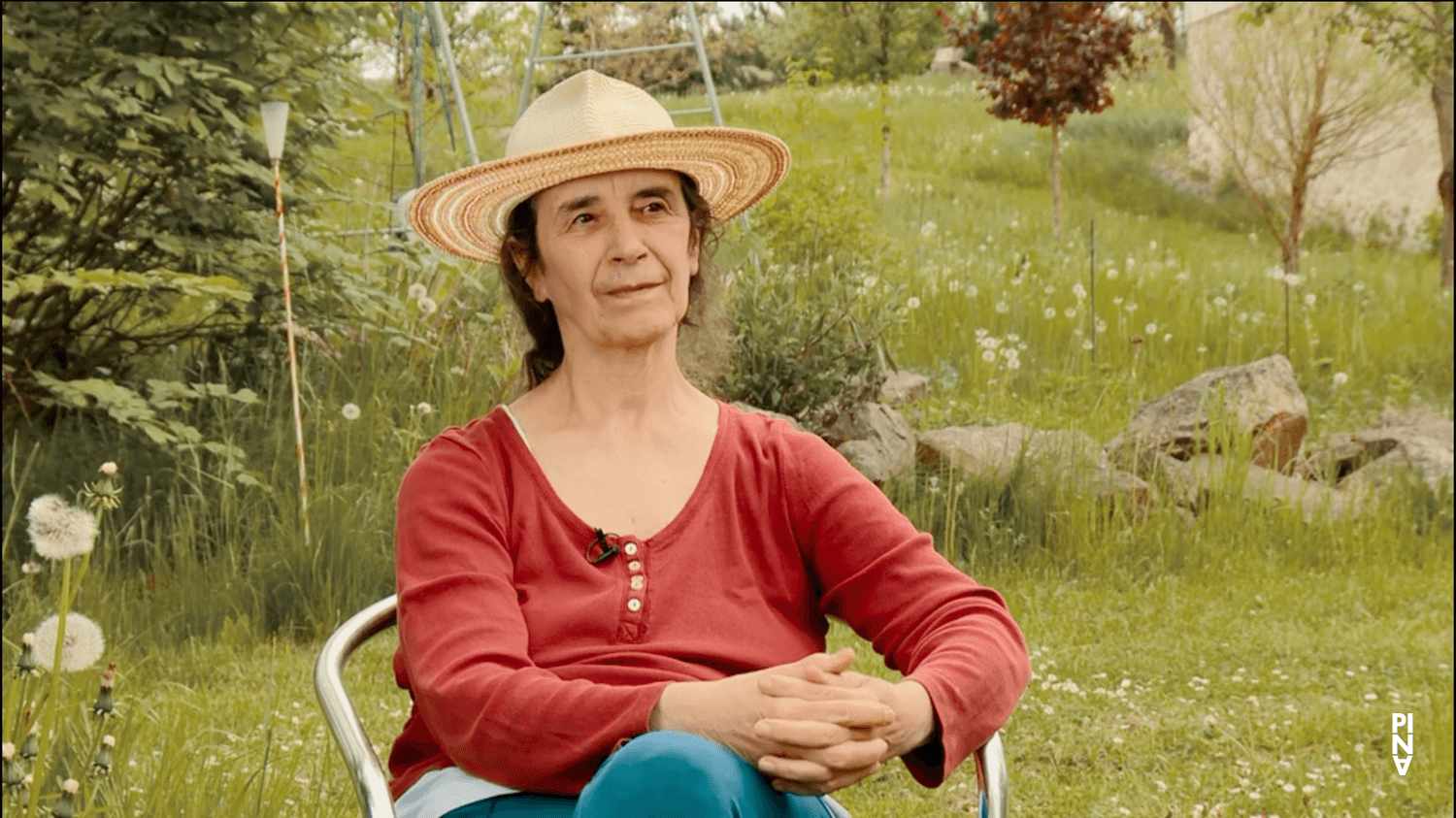
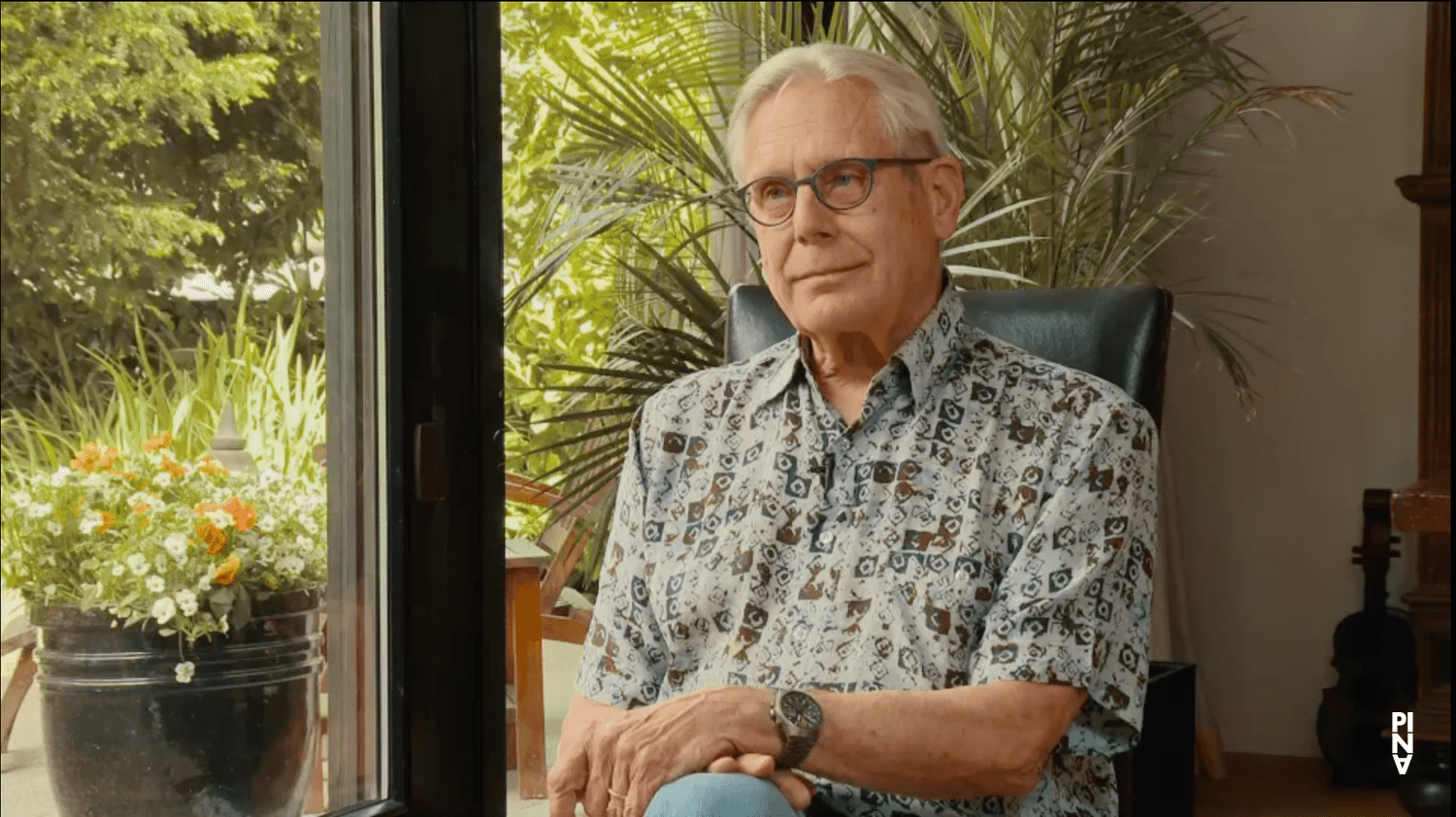

Legal notice
All contents of this website are protected by copyright. Any use without the prior written consent of the respective copyright holder is not permitted and may be subject to legal prosecution. Please use our contact form for usage requests.
If, despite extensive research, a copyright holder of the source material used here has not been identified and permission for publication has not been requested, please inform us in writing.